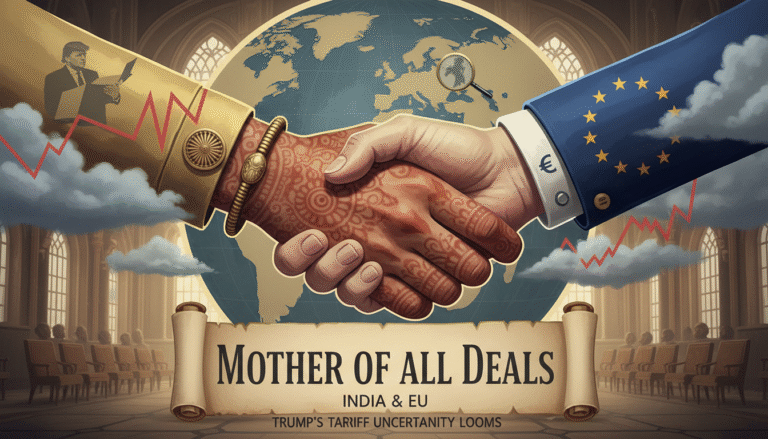

Trump tariffs and India: Risks, Opportunities, and the Road Ahead
India’s Outlook on US Tariff Moves in 2025
Why this matters to India
As conversations about Trump tariffs surge across India’s feeds, exporters, investors, and consumers want clarity. Will duties rise broadly on imports into the United States, and how might that reshape India–US trade? This explainer breaks down what’s known, who’s exposed, and how to prepare while policy details evolve.
Table of Contents
What’s on the table
While specifics could shift in the months ahead, Trump tariffs generally refers to proposals for a universal baseline levy on all imports into the US, with steeper rates focused on China. In practice, any move would run through legal and administrative channels, with carve‑outs or product‑level exemptions possible. Markets are bracing for scenarios rather than certainties, and that means contingency planning matters.
Exposure for Indian exporters
India doesn’t sell as much to the US as China does, but the market remains our single biggest export destination. If Trump tariffs widen to cover a broad set of goods, Indian exporters in textiles, auto parts, machinery, electronics, and gems and jewelry could face higher landed costs and tougher pricing. The early pressure would be felt in order books, discounting, and renegotiated contracts.

Supply‑chain spillovers
Spillovers could bite even when a product is not directly targeted. Global suppliers often re‑route shipments to avoid higher duties, shifting competition and compressing margins for Indian firms. Multinationals may re‑draw sourcing maps, favoring countries with preferential access or lower compliance friction, and that could tilt investment flows across Asia.
Sectors to watch
Watch these exposure points: high value‑added engineering goods, specialty chemicals, smartphones and components, footwear and apparel, polished stones, and steel‑adjacent products. Consumer‑facing categories that rely on US holiday seasons are especially vulnerable to rush cancellations and chargebacks. Pharma formulations look relatively resilient, but packaging, devices, and API supply chains could still see cost creep.
Costs and inflation
Indian manufacturers import many intermediate inputs via East and Southeast Asia. If Trump tariffs disrupt regional trade lanes or divert US demand, input costs, insurance premia, and freight rates could swing, pressuring margins at home. Some of that may pass through to retail prices, complicating inflation management just as interest‑rate expectations are shifting in 2025.
Markets and currency
Financial markets have been reacting to headlines, not final rules. Rupee moves against the dollar can amplify or cushion tariff shocks, and sectoral indices tend to underperform when Trump tariffs chatter intensifies. Exporters with natural hedges, diversified geographies, and strong balance sheets should fare better than single‑market, single‑product players.
What businesses can do now
What should businesses do now? Start with a quick HS‑code audit to map US exposure, then pressure‑test pricing with 5–15 percent duty assumptions. Renegotiate Incoterms, explore duty drawback and free‑trade‑zone options, and expand near‑market warehousing. If Trump tariffs materialize, origin rules, documentation, and compliance discipline will separate the winners from the rest.
Policy options for New Delhi
New Delhi has tools too. Expect stepped‑up diplomatic outreach, tariff parity pleas, and targeted support for at‑risk sectors through credit guarantees and working‑capital relief. If Trump tariffs take a broad form, India may seek selective concessions, align Production‑Linked Incentive schemes to encourage deeper value addition, and accelerate trade talks that diversify export risk.
Signals to monitor
What to watch next? Any US Trade Representative notices, lists of covered HS codes, and timelines for public comment. Track exemption pathways for critical goods, and pay attention to how supply chains adjust in Mexico, Vietnam, and the Middle East. For India, the smart play is to prepare for multiple outcomes so that, whatever shape Trump tariffs finally take, we stay competitive and ready.
Opportunities amid change
Not every outcome is negative. If duties push US buyers to diversify away from China, India can gain share in categories like pharmaceuticals, engineering goods, toys, and electronics assembly. Firms that can certify higher local value addition, meet tight lead times, and offer stable quality will be well placed to capture new contracts as supply chains recalibrate.
Logistics and finance playbook
Logistics is a quiet swing factor. Shippers should lock in capacity early for peak seasons, diversify ports of loading, and keep buffer stock in regional hubs. On finance, extend hedging tenors, revisit receivable insurance, and model how longer cash‑conversion cycles affect covenants. Banks are far more receptive to proactive risk management than last‑minute firefighting.
Consumer impact
Indian consumers may not feel an immediate shock, but second‑order effects can creep in. If global input costs rise and exporters absorb less of the hit, domestic prices on select goods could edge higher. A push for deeper domestic manufacturing—components, tooling, and specialty materials—would limit pass‑through and strengthen the Make‑in‑India story.
Data‑driven decisions
Keep an eye on container spot rates, outbound and inbound freight bookings, and US retail inventories, which reveal demand shifts early. India’s PMI new export orders, customs data by HS code, and corporate earnings guidance can flag pressure before it becomes headline news. Early signals let businesses tweak pricing, production, and inventory with less pain.
Q1) What exactly is being proposed?
Proposals in Washington have discussed broad import duties alongside higher rates on specific countries or product lines. Final rates, scope, and exemptions would depend on legal processes and administrative rulemaking.
Q2) Which Indian sectors face the most exposure?
Engineering goods, textiles and apparel, footwear, smartphones and components, gems and jewelry, and certain steel‑linked items. Pharma is relatively resilient, but packaging and devices can be affected via input costs.
About the Author