Trump Withdraws Canada's Invitation After Davos Clash
Trump Withdraws Canada’s Invitation to Board of Peace: A Deep Dive
The diplomatic relationship between North American neighbors took a sharp turn this Thursday evening. In a move that surprised political analysts and world leaders alike, US President Donald Trump announced a significant change to his newly constituted international organization. The headline making waves across the globe is clear: Trump withdraws Canada’s invitation to join the Board of Peace.
This decision marks the latest escalation in a growing spat between the United States and Canada, centered around conflicting visions for global order and financial disagreements regarding the new organization.
The Announcement on Truth Social
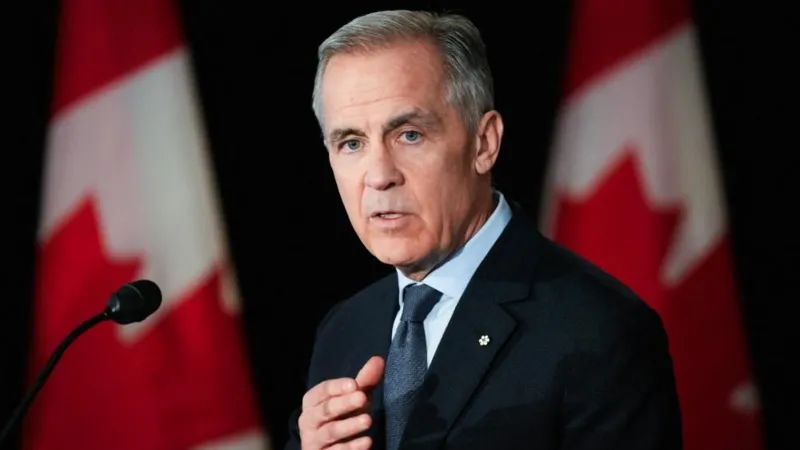
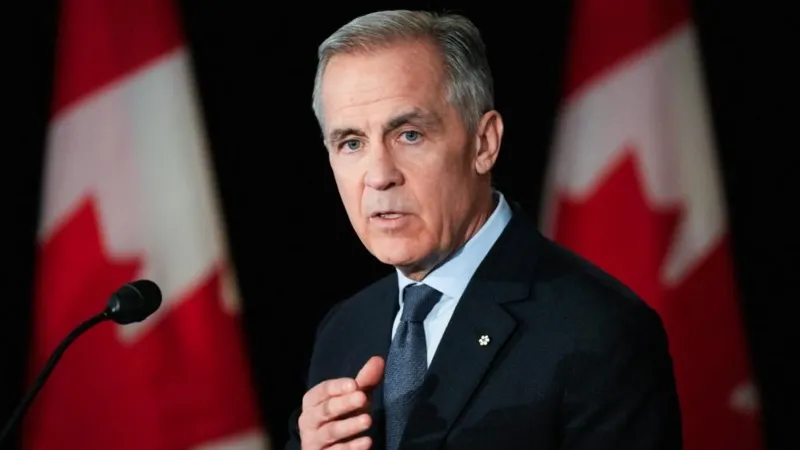
The news broke via a post on Truth Social, where President Trump addressed Canadian Prime Minister Mark Carney directly. The message was formal yet blunt, stating, “Please let this Letter serve to represent that the Board of Peace is withdrawing its invitation to you regarding Canada’s joining.”
While the President did not explicitly list the reasons in the post why Trump withdraws Canada’s invitation, the timing offers plenty of clues. The revocation comes immediately after a tense week involving public exchanges of barbs between the two leaders.
The “Freebies” and the Billion-Dollar Fee
One of the primary friction points appears to be financial. The Board of Peace, which critics argue is designed to supplant the functions of the United Nations, comes with a hefty price tag. President Trump has stipulated that permanent members are asked to pay a $1 billion (£740m) membership fee to help fund the board.
Ottawa had recently indicated that while they were willing to join the board in principle to maintain diplomatic ties, they would not be paying the membership fee. This refusal likely contributed to the decision where Trump withdraws Canada’s invitation.
The Davos Showdown: A War of Words
Beyond the money, the ideological clash between Trump and Prime Minister Mark Carney has been playing out on the world stage. Earlier this week at the World Economic Forum in Davos, Carney delivered a speech that received a standing ovation. He warned of a “rupture” in the US-led global order and urged “middle powers” to band together against economic coercion.
Although Carney did not name Trump, the implication was clear. In response, Trump told the gathering in the Swiss resort that Canada benefits from American “freebies,” stating, “Canada lives because of the United States. Remember that, Mark.”
Carney fired back during a speech in Quebec on Thursday, asserting that “Canada thrives because we are Canadians.” It was shortly after this retort that Trump withdraws Canada’s invitation.
What is the Board of Peace?
To understand the gravity of the situation, it is essential to look at what the Board of Peace actually is. Billed by the US as a new international organization for resolving conflicts, it gives Trump wide decision-making powers as “chairman for life.”
Originally thought to be focused on ending the war between Israel and Hamas in Gaza, the board’s charter has raised eyebrows because it does not mention the Palestinian territory. Instead, it seems structured to bypass the UN.
Despite these controversies, about 35 nations—including Argentina, Saudi Arabia, Hungary, and Egypt—have signed up. However, none of the other permanent UN Security Council members (China, France, Russia, and the UK) have committed. Now, following the news that Trump withdraws Canada’s invitation, the board is missing another key G7 economy.
International Reaction and EU Skepticism
The international community is reacting cautiously to the new body. European Council President Antonio Costa noted that while European leaders have “serious doubts” about the board’s scope and governance, they are willing to work with it specifically regarding Gaza.
Spain has outright declined the invitation, and France has called the charter “incompatible” with current international commitments. The United Kingdom has also expressed concern over the inclusion of Russian President Vladimir Putin.
In this climate of hesitation, the fact that Trump withdraws Canada’s invitation sends a signal that the US President is willing to exclude traditional allies who do not fully align with the board’s financial or political structure.
Conclusion
As the dust settles, Prime Minister Carney’s office has yet to issue a formal response to the social media post. However, the message is clear: the “special relationship” between the US and Canada is facing a stress test. Whether this is a permanent break or a negotiating tactic remains to be seen, but for now, the headline remains that Trump withdraws Canada’s invitation to the Board of Peace.
Frequently Asked Questions (FAQs)
1. Why did Trump withdraw Canada’s invitation to the Board of Peace?
While Trump did not give a specific reason in his post, it is widely believed to be due to Canada’s refusal to pay the $1 billion membership fee and recent critical comments made by Prime Minister Mark Carney about the US-led global order.
2. What is the Board of Peace?
The Board of Peace is a newly constituted international organization chaired by Donald Trump. It is billed as a body for resolving conflicts, specifically the war in Gaza, though critics fear it is designed to replace functions of the United Nations.
3. Who has joined the Board of Peace so far?
Approximately 35 nations have signed up, including Argentina, Egypt, Saudi Arabia, Turkey, and Hungary. However, major powers like the UK, France, China, and Russia have not committed to participating.
About the Author