India and EU Set to Announce Historic Free Trade Agreement
The atmosphere in New Delhi is buzzing with anticipation as India prepares for its Republic Day celebrations next Monday. While the parades and ceremonial pomp are always a spectacle, this year’s event carries a massive economic undertone. European Council President Antonio Luis Santos da Costa and European Commission President Ursula von der Leyen are set to attend as chief guests, signaling a major turning point in the India European Union relationship.
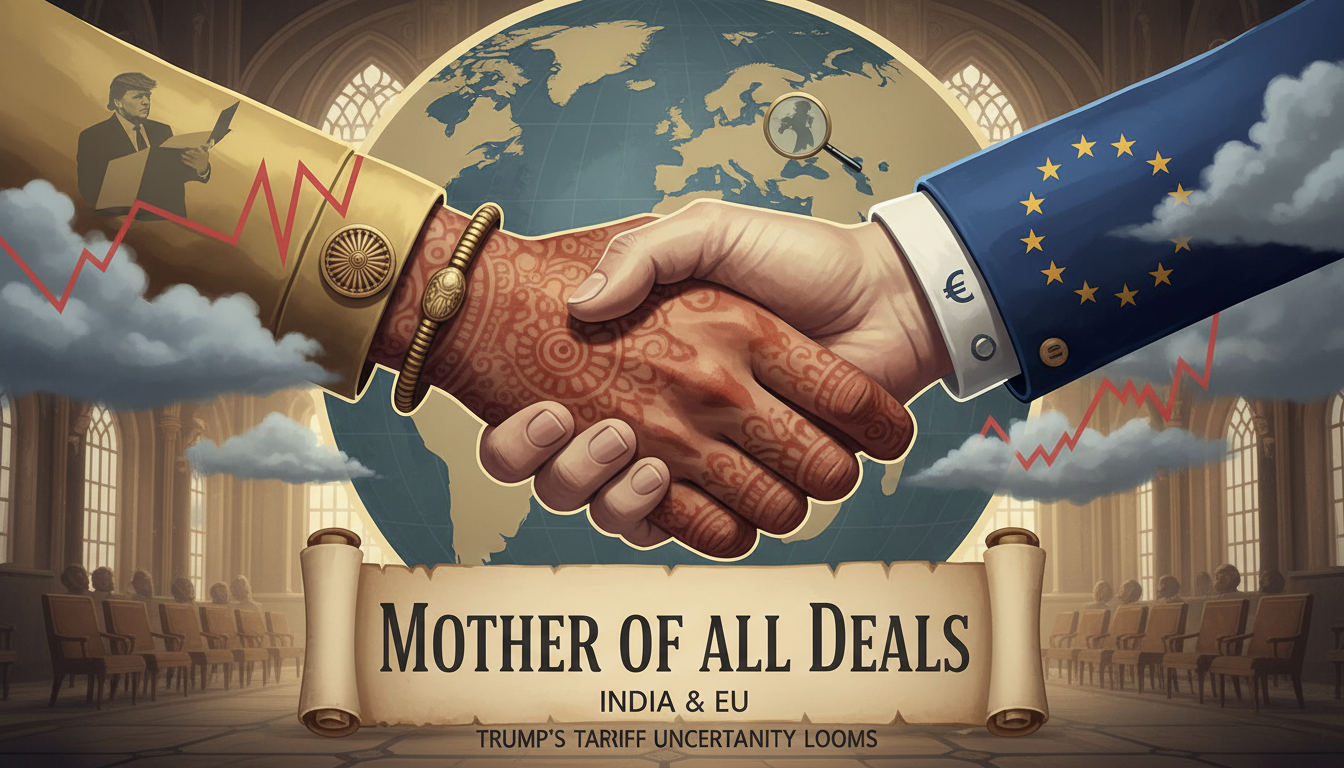
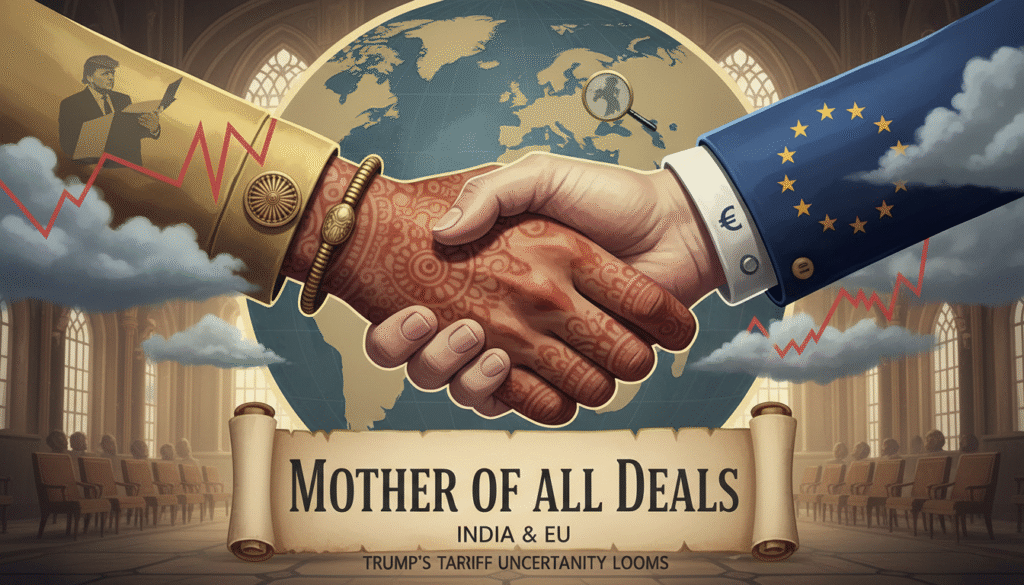
For nearly two decades, negotiators have gone back and forth, but sources now suggest that the “mother of all deals” is finally nearing the finish line.
A Geopolitical Shift Away from Uncertainty
Why is this happening now? The timing isn’t accidental. The world is facing a tumultuous geopolitical moment. With President Donald Trump threatening to escalate trade wars—sparked by tensions over a US takeover of Greenland—and Washington imposing 50% tariffs on Indian goods, both New Delhi and Brussels are looking for stability.
The India European Union alliance sends a clear diplomatic signal: India is diversifying its foreign policy. By accelerating ties with Europe, New Delhi is showing that it is not beholden to the whims of the Trump administration. As Chietigj Bajpaee from Chatham House noted, this move highlights that India is seeking reliable partners outside of the US-China dynamic.
The “Mother of All Deals“
Reports indicate that this historic agreement could be announced as early as January 27, during a high-level summit between the leaders. Both Ursula von der Leyen and India’s Trade Minister Piyush Goyal have emphasized the magnitude of this pact.
This will be India’s ninth free trade agreement (FTA) in just four years, following successful deals with the UK, Oman, and New Zealand. For the EU, this follows trade deals with the Mercosur bloc, Japan, and Vietnam. The India European Union pact is mutually beneficial; it helps India offset US tariff issues and helps the EU reduce its trade dependence on China, which it views as increasingly unreliable.
Economic Powerhouse: What’s at Stake?
The economic implications of this deal are staggering. India is currently the world’s fourth-largest economy and is on track to overtake Japan, with a GDP approaching $4 trillion.
According to von der Leyen, joining forces would create a massive free market catering to two billion people and accounting for a quarter of the global GDP. For New Delhi, the India European Union trade deal marks the restoration of the Generalised System of Preferences (GSP). This is crucial because the withdrawal of GSP benefits in 2023 hurt the competitiveness of Indian exports.
Ajay Srivastava of the Global Trade Research Initiative (GTRI) points out that an FTA would restore lost market access. It promises to lower tariffs on key Indian exports, including:
- Garments
- Pharmaceuticals
- Steel
- Petroleum products
- Machinery
Navigating Sensitive Sectors
While the deal is ambitious, India is sticking to its “protectionist carapace” in certain areas to safeguard domestic interests. As seen in previous deals with the UK, India is expected to protect politically sensitive sectors like agriculture and dairy.
However, consumers can expect tariffs to come down in a phased manner for sectors such as automobiles, wines, and spirits. This phased approach allows India to manage the transition smoothly while opening its doors to European goods.
The India European Union collaboration is more than just numbers on a spreadsheet; it is a strategic maneuver. By moving sensitive issues to later rounds of negotiation, both sides have prioritized the geopolitical symbolism of the deal alongside its economic substance.
Conclusion
As the Republic Day celebrations kick off, the world will be watching. This agreement is not just about lowering taxes; it is about two global powers finding common ground in a fractured world. The India European Union free trade agreement promises to be a stabilizing force, creating a reliable corridor for commerce and innovation for years to come.
Frequently Asked Questions (FAQs)
1. When is the India-EU trade deal expected to be announced?
Reports suggest the deal could be announced as early as January 27, when leaders from both sides meet for a high-level summit following the Republic Day celebrations.
2. Why is this trade deal considered the “mother of all deals”?
The deal is significant because it connects two huge markets—creating a free trade zone for two billion people that accounts for a quarter of the global GDP—after nearly two decades of difficult negotiations.
3. Which Indian sectors will benefit most from this agreement?
The agreement is expected to lower tariffs and boost exports for Indian garments, pharmaceuticals, steel, petroleum products, and machinery.